
Apple gets praised for the same three things on repeat: the ecosystem, the software polish, the "it just works" fluidity. All fair. All true. But it's also the easy, obvious take, the one that requires the least scrutiny to make, because it's the one Apple's own marketing has been feeding people for fifteen years.
The more interesting claim, and the one that gets said far less often, is this: Apple's actual competitive advantage isn't software. It's hardware. Nobody else builds it as well as they do.
This is not a fanboy argument. It comes with real counterpoints, and I'll get to them. But the case is stronger than it gets credit for.
The MacBook hinge is a strange thing to be famous for, and it's earned it
Laptop hinges are not supposed to be a talking point. They're a commodity part, the kind of thing you only notice when it's bad, when it wobbles, when the screen flops back, when it creaks after eighteen months. Apple turned a component nobody should care about into one of the most consistently praised parts of its product line. Reviewers who have no reason to compliment Apple have spent a decade complimenting the MacBook hinge specifically: the resistance is even, it holds any angle without drift, you can lift the whole laptop open one-handed with a single finger under the lid, and it does this on day one and on day one thousand.
That's not an accident of good taste. That's a supply chain and tolerance-engineering achievement. It means Apple is willing to over-engineer a part that most competitors treat as a bill-of-materials line item.
The iPhone's durability reputation is boring, and boring is the point
iPhones aren't indestructible, and Apple doesn't claim they are. But independent drop-test and teardown coverage has consistently put iPhones near the top of the durability rankings for the price-comparable Android flagships, and, more tellingly, resale data backs it up. Used iPhones hold value longer than used Android phones from any manufacturer, several years running, and a meaningful chunk of that is condition: they simply survive longer in usable shape. That's not a subjective "feel" argument. That's a market pricing durability in.
Combine that with Apple's software-support window, iPhones commonly get six to eight years of OS updates, well beyond what most Android OEMs commit to, and you get devices that don't just survive physically, they stay usable on purpose. A phone that's built like a tank but gets cut off from updates after three years is a different product than one built to be functionally alive for the better part of a decade. Apple ships both halves of that equation.
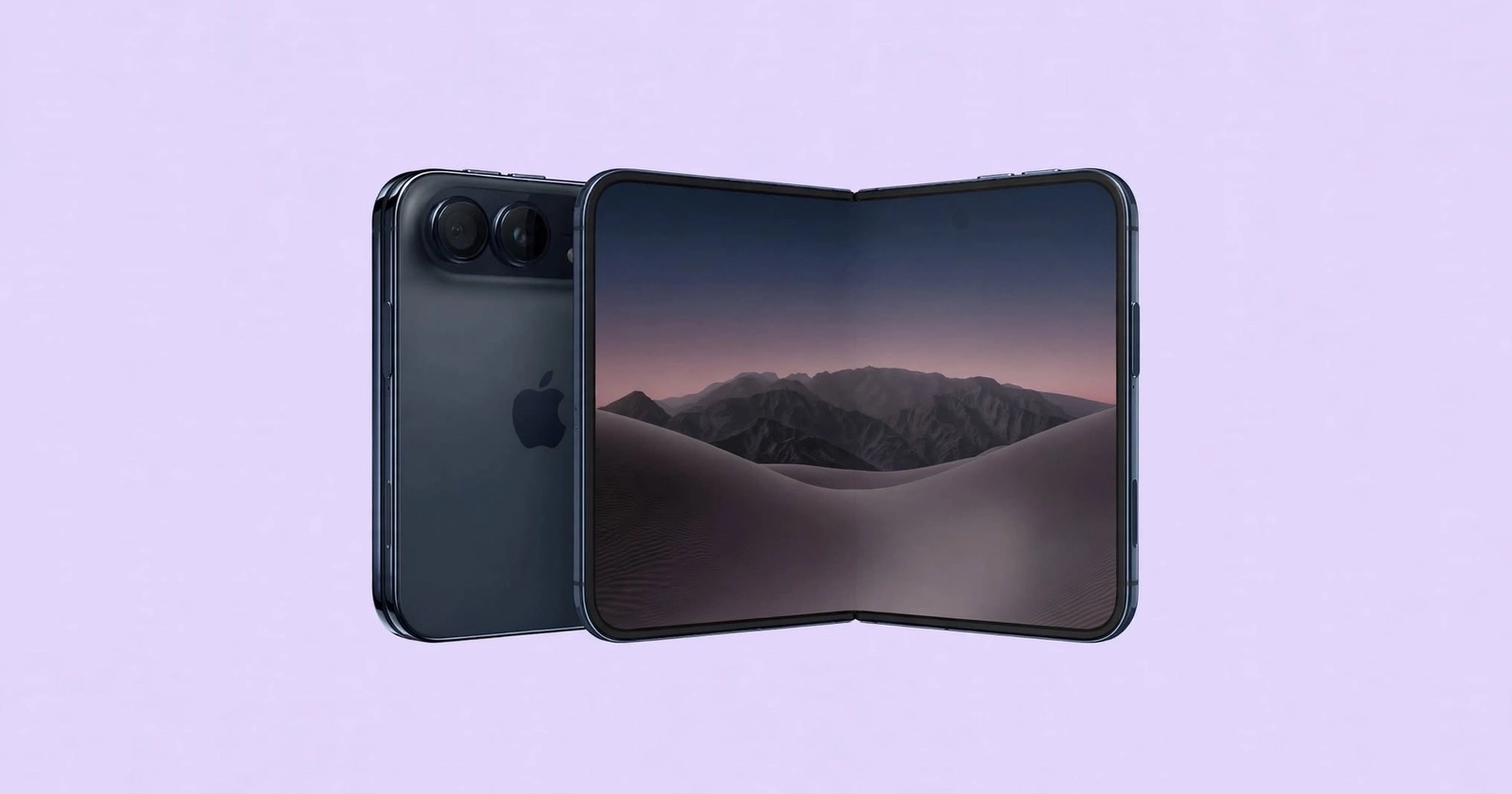
What Apple did differently with the iPhone Duo
The just-announced iPhone Duo is a good test case, because it's easy to overstate what it does. It is not the industry's first foldable with a "half-open" mode, Samsung's Z Flip line has had a version of this since 2020 (they call it Flex Mode), letting the phone stand propped open at an angle for hands-free video calls or photos. So if the pitch is "Apple invented this," that's not accurate, and it's worth not repeating that claim, because anyone who's used a Z Flip will clock it immediately.
What is legitimately different is the execution. Apple's hinge, described as built from over 100 precision components, is engineered to hold the display genuinely flat with a minimized crease using a nano-texture, multi-layer bonded screen, rather than the visible seam that's still standard on most foldables. It's also wrapped in a titanium frame with Ceramic Shield front and back and carries a full IP68 rating, which is a durability spec most first-generation foldables from other manufacturers didn't launch with. That's the actual Apple pattern, repeated again: not first to the format, but first to make the format feel finished. It's the same move Apple made with MP3 players, tablets, smartwatches, and wireless earbuds. Apple is almost never the pioneer. It's consistently the company that ships the version that doesn't feel like a first draft.
Why this matters more than the ecosystem talking point
The ecosystem argument gets repeated so often it's become the default explanation for why people stay loyal to Apple. But ecosystems can be replicated, Google and Samsung have spent a decade building competing versions of iMessage-adjacent lock-in, cross-device handoff, and shared-account continuity, with real progress. What's much harder to replicate is a decade-plus of manufacturing discipline: the hinge tolerances, the machining precision on unibody aluminum, the willingness to co-design silicon and hardware together (which is also why M-series MacBooks get such absurd battery life, that's a hardware story wearing a software costume).
Software fluidity is a real advantage. But it's the advantage everyone can see, which is exactly why it gets all the credit. The hardware is the advantage that's quietly been compounding in the background the whole time.